

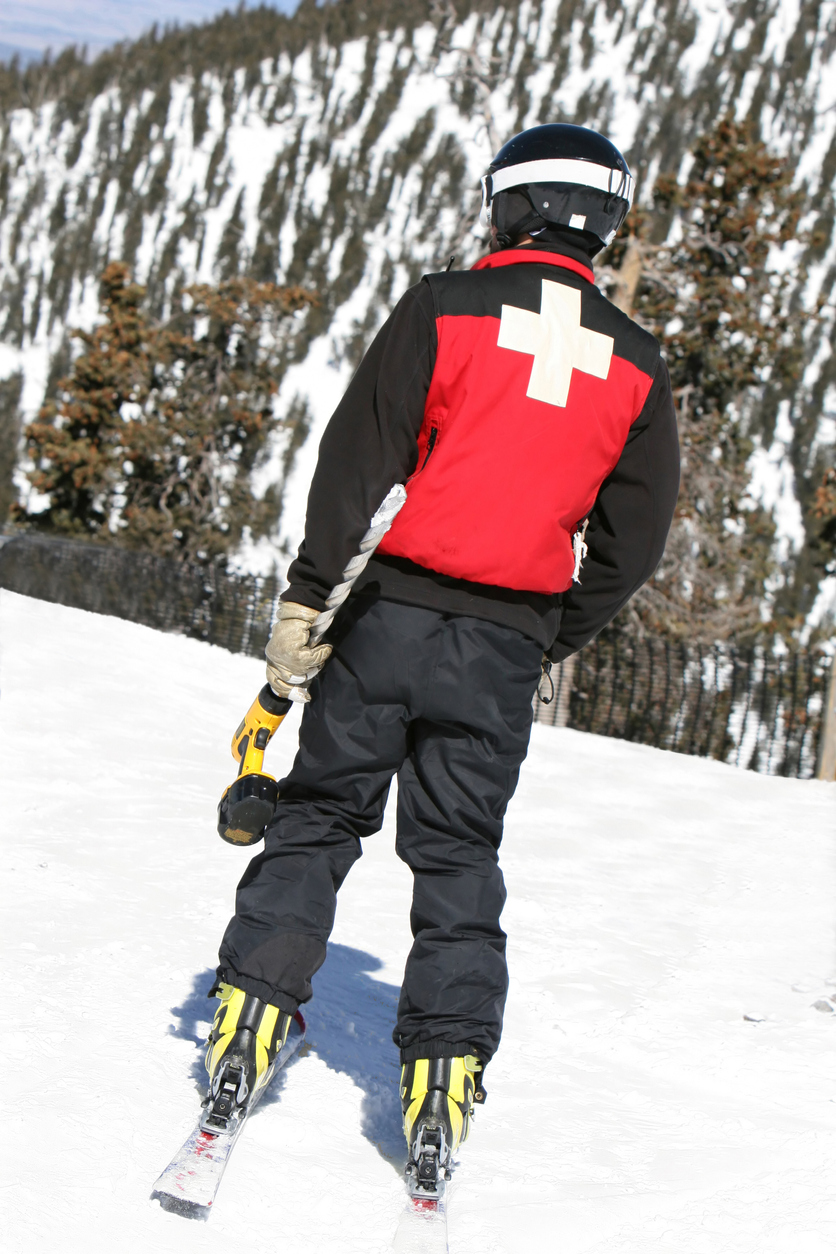
Skier/Snowboarder Responsibility Code – More Thoughts
Let’s face it, unless you’re an active ski instructor trying to instill key concepts to your students, or a parent/grandparent trying to explain this thing to a relative or grandchild, when’s the last time you actually read this “Code”, now with 10 points?
Instead of reading each numbered point, let’s think about the most important messages we’re trying to convey to anybody and everybody we think needs to know this stuff.
Using the numbered list, and starting with kids, I ‘d go with these over everything else:
1. Ski or snowboard at a speed you can control. That means being able to slow down quickly to avoid other people, trees or objects in front of you. Why? So you don’t get injured, and so you don’t injure other people, because either of those outcomes will wreck your day.
2. Understand who has the right-of-way. That means people who are ahead of you or downhill from you have the right-of-way. Why? Because they are unable to see skiers/riders behind them, and it’s not always safe to be turning one’s head around anyway while descending a ski hill. The rule is simply: anybody ahead/downhill of you have the right to keep on skiing, and YOU have a responsibility to keep out of their way.
For my own kids I always gave them a“perimeter” concept which went like this:
Always keep an eye out for who is getting too close to you. Always try to find space where your progress downhill is not continually interfered with by nearby skiers. This was helpful because – being kids – they’d always find the loophole in my directions.
For example, they quickly explained that sometimes there’s a skier on the right, and even on the left, who is either right next to them, or a bit above or below. So who’s got the right of way now, they’d ask me?
3. Stop where you can be seen. This one I demonstrated physically, on the hill, when I took my kids to terrain where there was a slight rise, and then a dip. I’d lie down (assuming no one was around), then yell to them, asking: “CAN YOU SEE ME NOW?” Of course, I chose a spot where the person lying down would be 100% hidden from a downhiller perhaps only 10-15 yards uphill. It amazed my kids that I’d disappeared.
To me, that was possibly the most dangerous situation of all. And once I’d shown my kids how someone lying down on the snow, but slightly ahead of them, and hidden by a dip in the trail following a slight rise, could appear invisible until it was too late, and a fast skier might collide directly into the “lying down” skier/rider. DANGEROUS TO BOTH PARTIES.
4. Get your bearings, and look uphill to make sure it’s safe to start downhill.
5,6,7. (Obey signs, keep off closed trails) All helpful, but secondary and common sense. Obviously, much more important in the big mountains out West.
8,9. Know how to load/unload lifts, and someone should be with a newbie who does not know such things. The code should indicate that ski area personnel are authorized to “pull lift tickets” from drunk and/or drug-affected individuals. On roads, police will arrest people for such violations, and it should be the same on ski hills and mountains.
10. Finally, besides trading contact info, and especially if it seems someone’s unwilling to share contact info, it’s never a bad idea to get a quick picture of the person.
See full list here: https://seniorsskiing.com/skier-snowboarder-responsibility-code/
Editor’s Note –
We invite you to add your comments about experiences with downhillers who have violated the safety code. Even more, we invite you to contribute a full article on your opinion of the current state of safety and courtesy on the slopes today. Add your comment directly to the article, or send us your full article to info@seniorsskiingmedia.com

Importance of Rental Demo Skis
I love to ski. (My wife says I live to ski). Most of my adult working life I was too busy to research new ski technologies and techniques. It is why I wound up skiing the same pair of Head Monsters for a decade until they wore out, and how I learned how important the demo process is to finding the perfect new pair of skis.
For years, my purchasing research typically was reading a few articles, talking to fellow skiers, and with a (hopefully) knowledgeable ski shop salesperson. Invariably, I would buy what one of them recommended. Maybe you have, too.
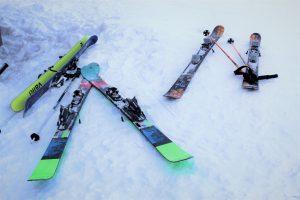
Photo by Anne Nygård on Unsplash
The last time I brought the Monsters in for sharpening, I was told there was nothing left to sharpen. Obviously, I had skied and sharpened the metal edges to death, and they finally died. It was time to buy a new pair. (Not my Salomon boots! I’ve had them spot-stretched three times, and they fit like a glove. I have had to replace the heelpieces, though.)
Instead of running to any ski shop to buy something, I chose to rent on my first full-week trip of the season and not rush to buy new ones. I’ve always shlepped my ski stuff wherever I’ve skied, both domestically and internationally, so this was an extra perk. (The serious convenience of shipping instead of shlepping skis to and from ski trips is a different subject.)
Flying into SLC in the early afternoon for a 70+ Ski Club trip, there was plenty of time to get to a ski shop to rent skis (fitted to my own great boots, of course). We discussed my ability, and he began to point out the differences of several brands and models he was considering for my skill level and body weight.
I asked if I could ski a different pair each day that he would suggest based on my feedback, and he agreed, even encouraging that. A good shop will let you swap as often as you want. So, I rented for the week, and took the first pair he suggested.
During the next five days I tried to remain focused on the skis while still enjoying my skiing each day, trying all different types of terrain, speeds and turns and paying attention as much as I could to weight shifting, balance, chatter, turn radius, carving, etc.
Whenever I had a few moments, I would dictate my impressions about the skis into my phone. At the end of the day, I would return the skis to the shop, meet the same sales/manager guy, and report what I liked and didn’t like, what it felt like, etc., compared to the previous day’s skis. Then, he would recommend a different pair for the next day based on my pros and cons, and repeat the process for the entire week.
At the end of the week I knew exactly which skis I liked the best and why– enough to buy them
I know ski performance can vary substantially between skis models. I just never felt it myself, until that week, and the differences were both noticeable and meaningful. Simply, my new skis improved my skiing and my enjoyment of skiing. I couldn’t be more satisfied.
They fit me and my ski style better than any other I’ve used in decades, even before the Monsters. They require the least amount of work to achieve the level of comfort I want while skiing, without the negatives of the others.
I can’t recommend this “trial” approach to purchasing skis strongly enough, especially if your purchasing method is to talk with sales folks, read a few articles and ask other skiers how they like what they’re skiing on. Most ski shops will apply your rental fee towards the purchase of a new pair from them at the end of the week, whether you rent one pair for the week or a different pair every day. Some will even sell you the actual demo pair that you fell in love with.
When these skis are worn out, I’ll be sure to find a new pair the same way.
Personal History of Hunter Mountain
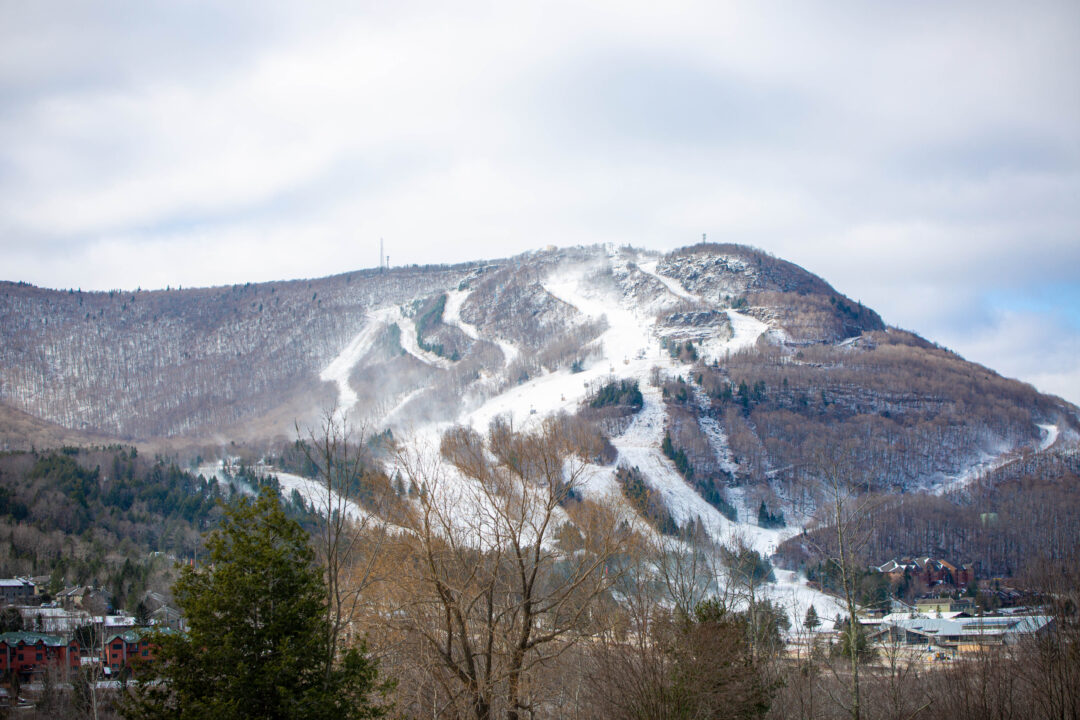
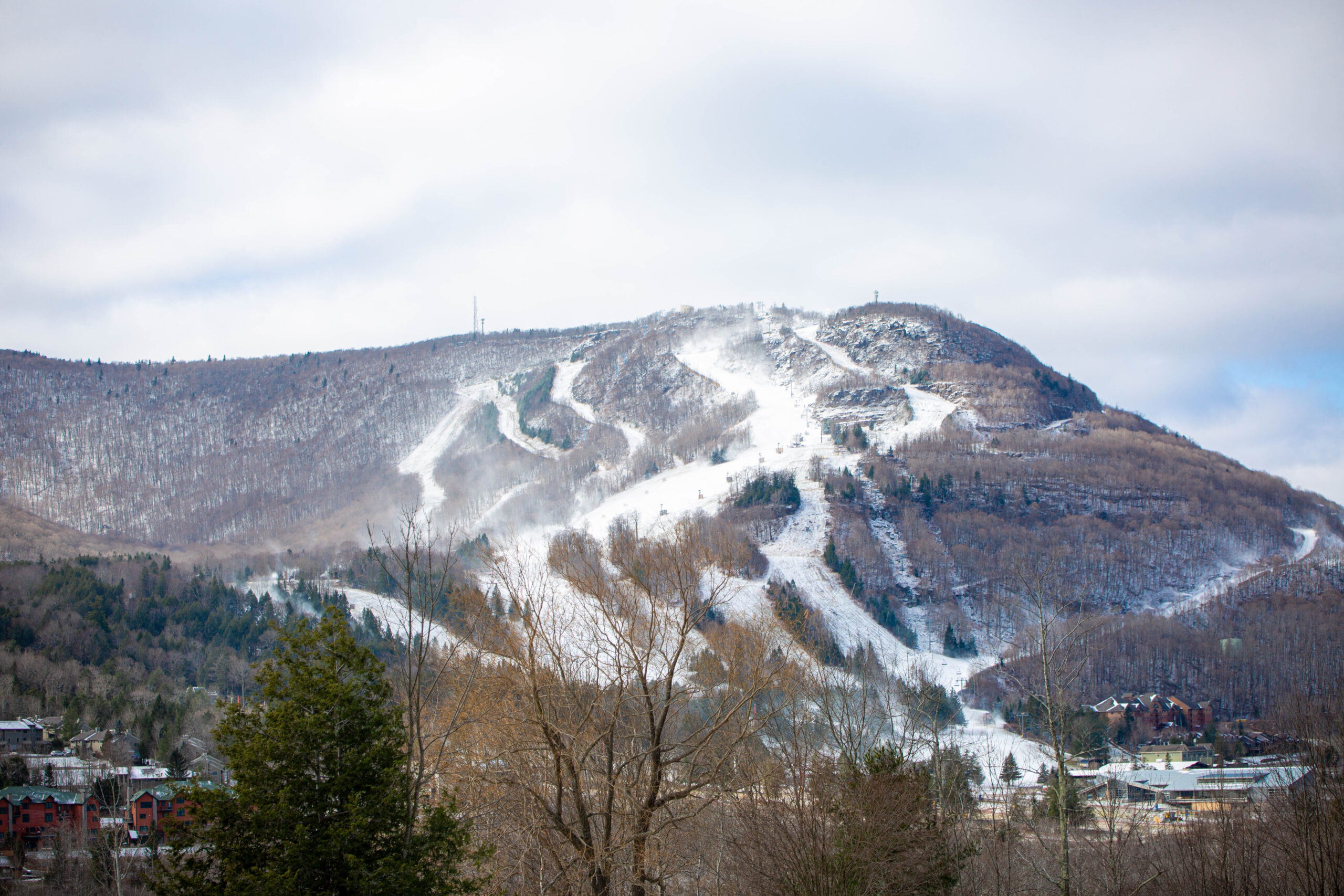
Photo Credit Hunter Mountain
Every time I drive Route 23A to Hunter Mountain, I am reminded of a lifetime connection to the area. I learned to ski here, and so did my kids, but I started visiting Tannersville long before the ski mountain opened in January, 1960.
My family spent two weeks each August at the Rose Garden Hotel when I was little. It was owned by childhood friends of my father from Frankfurt. It was always a joyful annual reunion – for those like my father who had escaped to America before WWII, for those with tattooed numbers on their arms who had survived the concentration camps, and for the American-born generation like me defying the goals of the “Final Solution”.
In addition to the rambling hotel building, there was a separate smaller one we all called The Casino. It was a multi-use facility for the grown-ups gambling for pennies on Canasta, Mah Johng or poker, rainy day activities for us kids, and dances and staff performances that were never the quality of “Dirty Dancing” for everybody.
It was in the swimming pool in the front of the hotel, adjoining the road, that a son of one of my father’s friends taught me to swim. I remember wishing he was the big brother I never had. Float. Breathe. Swing your arms like a windmill and kick your legs like you are running. And I did not drown.
In high school, I discovered skiing when a friend – the only person my age who owned a car – invited a bunch of us to go skiing at newly-opened Hunter. It was a day-trip, because we could afford gas and equipment rentals, but not a hotel.
At the time, I was a pretty accomplished ice skater – good enough to be an after-school and weekend instructor at the Wollman Rink in Central Park. But one day on skis told me I would rather go downhill than around in circles.
What was then called Hunter Mountain Ski Bowl was founded by Broadway theater people who had skied in Europe on tour and wanted somewhere to ski close to home. But they knew nothing about operating a ski hill and soon sold out to a local company, the Slutzky Brothers Construction Company, which had bulldozed some trails. Brothers Orville and Isadore (Izzy) Slutzky, also were the children of immigrants.
For a time, Hunter was known for its snowmaking – it was a pioneer in the then-new technology – and for its nightlife. Most of the world’s snowmakers in the 60s and 70s learned from their son/nephew David Slutzky, who pretty much perfected the technique. I don’t think he’s ever gotten full credit for that. The snowmaking – not the party scene.
Hunter also became popular with restaurant chefs who came to the USA when Julia Childs put French cooking on the American map, and who missed skiing their native Alps. They would ski Hunter on Mondays, when their restaurants were closed, and created their own ski club. The US Chefs Ski Club was founded by Andre Soltner, the fabled owner of Lutece, NYC’s top restaurant at the time, and apres ski featured fine French wines, not beer. The club still exists, including charity fund-raising races and other events. Some members are 40-year-plus friends.
Another club with deep roots at Hunter, the 70+ Ski Club, will hold their 47th annual race and fun day Wednesday March 6.
Sometime after I grew up and had kids, the Rose Garden Hotel became the Villa Vosilla. By then, I had traded broadcast news to be a travel writer and ski writer, which meant access to Hunter’s owners for interviews. This is when I told Orville Slutzky about my Rose Garden Hotel history, including learning to swim in the pool there.
“We built it,” he said simply, in his cluttered office on the second floor overlooking the lodge’s cafeteria.
The beloved vacation retreat of my childhood has changed names and ownership once again. Now, it is the upscale Melour Resort. A thick row of greenery now blocks the view from the road of the swimming pool and the hotel behind it built by the Slutzky Brothers Construction Company.
Hunter also has changed ownership. After Orville and Izzy passed away, the second-generation sold out to the Peak Resorts group, which owned several resorts in the Northeast. A few years later, Peaks sold to Vail Resorts, which operates it today, putting Hunter on the Epic Pass.
I’ve been known also to get wistful looking at the windows where Orville’s office used to be. They are covered over now and I have no idea what is there. Maybe storage, which is pretty much what his wonderfully messy desk and shelves were.
While I have skied uncounted times at the resort the Slutzkys built and put on the world ski map, I never stayed again at that hotel of my childhood. Maybe one day soon.
[authors_page role=contributor]