

If It Doesn’t Hurt, You’re Not Doing It Right!
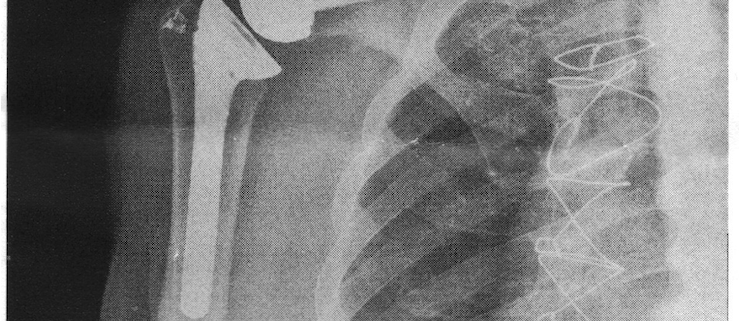
For the last two ski seasons my right shoulder has been giving me increased trouble when poling, especially in the flats. I visited my orthopedist, and x-rays revealed my shoulder had inoperable bone spurs. I needed a total shoulder joint replacement. This would be my 11th surgery in 20 years. Mentally, I wasn’t ready for another surgical procedure and stint at rehab. I inquired what my options were short of surgery. For the next two years I received quarterly cortisone shots in the shoulder. While effective over that period, last season the shots were no longer providing much pain relief, as predicted by my physician. It was time for the replacement surgery.
When I told my surgeon I was ready for the surgery at last, he asked me when I wanted it. I told him July. Knowing I’m an avid skier he laughed and said, “David, nobody on Cape Cod wants surgery in July except you. Pick any date you want.” Of course, I backed into a date I thought would provide plenty of time to be strong on-snow in December. On July 14th I had my right shoulder joint totally replaced.
Frankly, the actual procedure was an ordeal to be endured. The first three-or-four-weeks post-op were almost as tough as my triple by-pass several years ago. It was mostly a pattern of cold therapy, pain pills and sleep during the day. Even though I was fortunate to have an adjustable bed; the most difficult aspect of sleeping at night was always being on my back. You’re strapped into a harness, that’s part sling and part waist band, designed to ensure minimal movement. It’s a lot like how sleeping in a strait jacket must be. Regarding cold therapy, here’s a tip: If you ever have major joint surgery consider buying or renting a Breg Polar Care Wave. The device pumps cold water into a shoulder or knee pad at a rate and temperature that doesn’t harm your skin or other tissue. No twenty minutes on per hour. I had days when I wore it for six or more hours at a time. It provided extended pain relief, which allowed me to take fewer pain meds, and reduced swelling faster which accelerated healing. Depending upon where you live you can buy the unit for $300 or rent it for $100 a week. It’s well worth it.
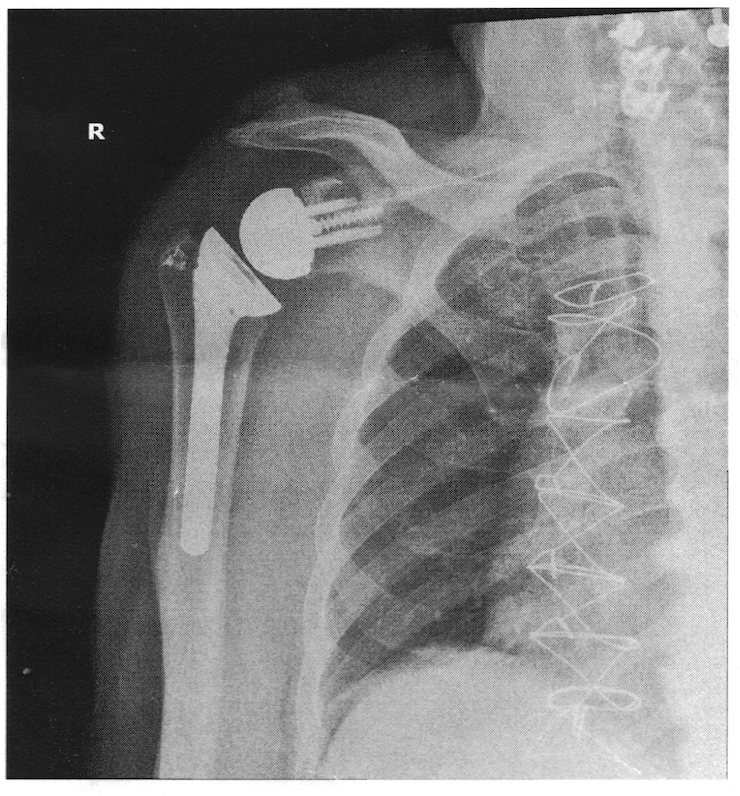
The new reverse joint replacement
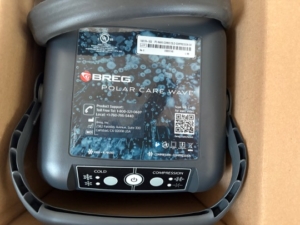
This Berg Polar Care Wave made the healing a little bit easier.
Make no mistake. The most important aspect of recovering from major joint replacement surgery is the post-op physical therapy. I’ve had the good fortune to find a talented physical therapist named Arron. Over the course of about two decades, he has gotten me through two hip replacement surgeries, three shoulder surgeries, a knee surgery, and a lumbar surgery. The regimen generally consists of an hour or so of light weight training and a lot of stretching two times a week. The fact that I’m still making turns at all is a testament to his work. I titled this article “If it Doesn’t Hurt, You’re Not Doing It Right!” because that’s pretty much Arron’s therapy philosophy. He says the #1 reason many patients don’t do well in post-op PT is they don’t (and in some cases can’t) work through the pain. I can certainly testify that while our sessions often push my pain tolerance to the limit at the time, the result is less pain and more range of motion immediately after each workout. During the course of a few weeks, I went from not being able to lift my arm to my chest to becoming able to scratch my nose and the top of my head. That may not sound like much but it’s huge progress when you can’t even cut your own meat or hold a glass of water due to the pain.
Heaven forbid you should ever need joint replacement surgery but if you do, find a physical therapist that will invest in your recovery. If you indicate you’re serious about doing the work it takes to make a full recovery (and getting back on the hill) they’ll respond and push you to heal, recover, and reach your goals.
Flats ahead? Who cares!
Skiing is Less Expensive Than Other Activities
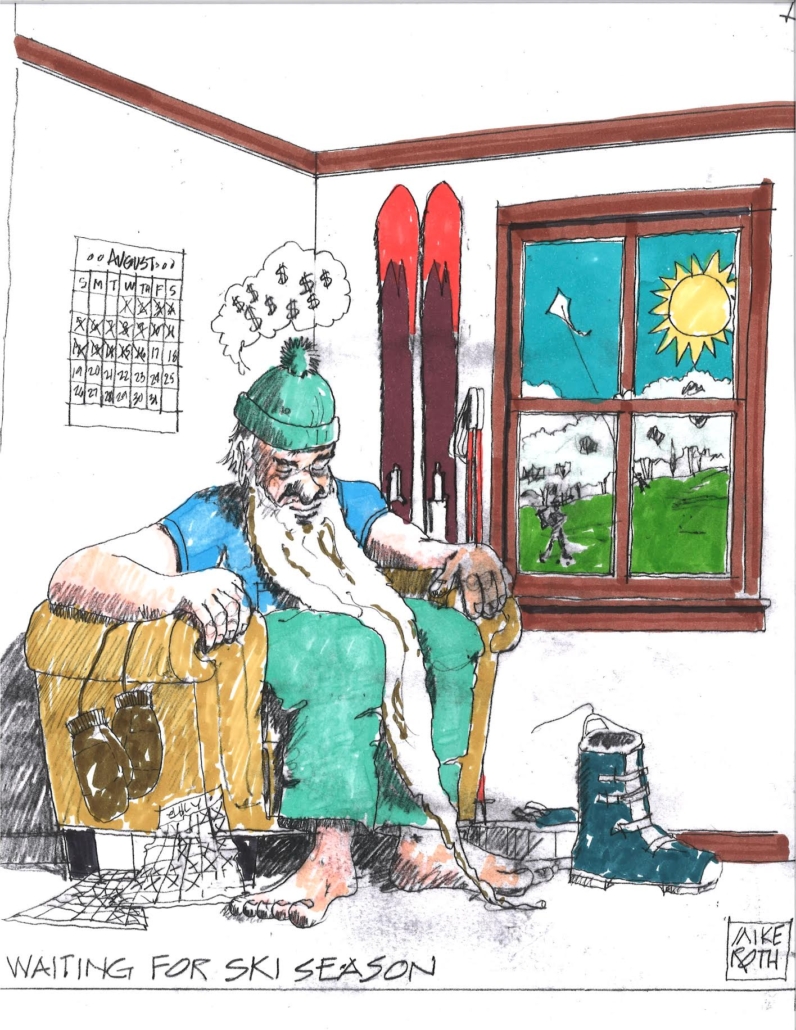
While sitting around last summer waiting for this winter appear, I started thinking about how much people spend on other entertainment and recreational opportunities during the year. These are just a few examples of choices people make and then say that “skiing is too expensive and only for the affluent.” By comparison, skiing is less expensive.
My son in law went to Pocono Raceway for the weekend to drive a high-end racecar on the track. The total experience took maybe 15 minutes zipping around the track five times or so at 120+ MPH. Yes, a thrill. It cost around $500 for this experience, far more than a one-day lift ticket. Of course, it was probably a $1000 weekend with motel, gas, tolls and meals.
What about river rafting trips, skydiving, bungee jumping, and other thrill seeing stuff can you think of?
Another friend went to a professional football game. Seats were $400 each (I am sure there were less expensive ones, but that was his choice). Again, getting there and staying for the weekend, including about four hours tailgating once in the parking lot, which costs as well, then 3 hours 15 minutes in the stadium to watch actual play time of about 18 minutes with lots of down time for penalties, time outs, commercial breaks, hurt players, other stoppages and half time. Not to mention that a hot dog and a beer probably cost about $15. Perhaps each.Basketball and hockey pricing can be similar, and forget Super Bowl tickets, which are in the thousands! Baseball tickets can be inexpensive, especially the bleachers. But if you want to sit behind home plate prices can range from $150 to $20,000 depending on the stadium and the importance of the game. And forget world series tickets!
 Tickets to a Broadway show range from $75 to $500 or more for premium seats at a popular show with an all-star cast. A friend told me they went to see Adele in Las Vegas but would not tell me what they spent. Checking online, I saw $1500 for the least expensive tickets and some premium seats in the $15,000 to $20,000 range.
My daughter wanted to go see Dancing with the Stars at Turning Stone. Cheapest tickets were $106, to up to $360 for floor seat. For a two-hour show, not going to happen! It’s free to watch on TV.
What about golf, popular with many senior skiers. A round of golf can range from $50 to $400 plus, again depending on where you play. The actual play time is about 45 minutes while the rest is walking to the ball, finding it, and waiting for other players. The best way to play this game is to play by yourself and to keep pace with the foursome ahead of you is to play 4 balls and score over 100 to get the most practice and more bang for the buck. Not to mention the cost of golf equipment and paraphernalia.
If you wanted to take your family of four to Disney, you can drop from about $6000 to $15,000 plus for the week and stand in line to get on every amusement ride. Compare that to the Ikon pass which is $1500 per adult, $1200 for teens thru 22 and $450 for kids 5-12. That’s for a whole season, not just one weekend. And there are many other passes as well, plus deals at your local ski areas.
I could go on and on, but it’s always a matter of choices and priorities.
Skiing is such a great family activity, including because high speed lifts generally keep lines shorter than at Disney. You can ski the entire season at your local ski area (assuming you are in a state that has skiing available locally) with a season passes with no restrictions on how many days you can ski, and have plenty left to go somewhere.
It’s even better for us seniors with steep discounts as we age, and I look forward to getting my great grandchild out on skis.
I believe skiing can be expensive but it’s relative, especially since there are many inexpensive ways to get to experience skiing, smaller local areas, and used equipment can get you and the family going.
Skiing is a lifelong enjoyable activity, with your friends or with your family. Rather than sitting around complaining about its cost, make your choices. It’s a matter of priority.
Mine is skiing. How about you?
Ready to Go! Southeast Ski Updates 2025/26
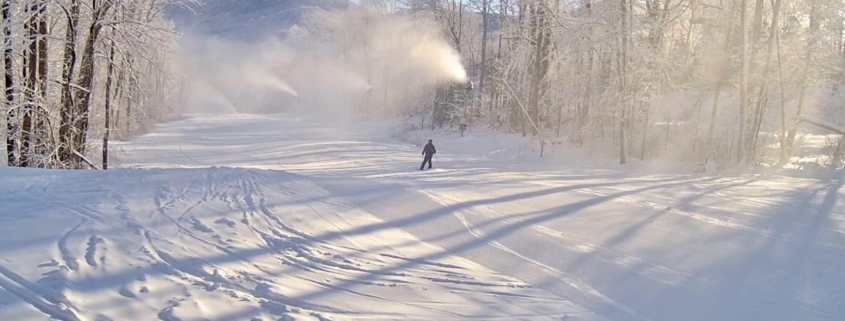
There’s intense anticipation for this winter in the Southern Appalachians. Early signs were hopeful with several regional resorts being among the East’s earliest openers thanks to pre-Thanksgiving cold, snow, and solid snowmaking into December.
Hurricane Helene
Hurricane Helene still haunts us. Ongoing news stories about struggling businesses closing and politicized federal recovery money not meeting expectations in amount and speed are real and really affect tourism. Luckily, last year’s ski season breathed post-hurricane vibrance into southern snow sports while energizing tourism in rural mountain resorts among the hardest hit by Helene.
That said, our southernmost mountain resorts, restaurants, hotels and occupancy tax dependent municipalities are hoping for a good season.
The Southern Alps, once isolated, are increasingly interstate accessible. Case in point Asheville, still recovering and in need of skiers’ good will, is a vibrant city surrounded by a jagged 6,000-foot skyline and a fast 30 minute I-26 drive from Hatley Pointe ski area. It’s easy to focus on AVL’s classic hotels and diverse and create rarefied ski memories. The Omni Grove Park Inn and new Flat Iron Hotel are top choices.
Here’s a state-by-state guide to what’s new in the Southeast
North Carolina
In the northwestern “High Country” corner of North Carolina, Appalachian Ski Mtn. has refined its automated snowmaking system, added a new snow groomer, and expanded snow making capacity and night ski lighting on main slopes. It’s also broken ground on a major new skier services center and a snow groomer garage, both to open next winter.
A few miles away, the “Hallmark Channel” town of Blowing Rock, regularly touted as the region’s quaintest mountain burg, has added new dining and lodging to slopeside options.
Beech Mountain Resort, the East’s highest ski area and town has rebuilt the mountaintop 5,506 Sky Bar pub and dining spot. The vista includes the nearly 7,000-foot spine of the Black Mountains, NC’s and the East’s very highest peaks, as well as Virginia’s highest summits.
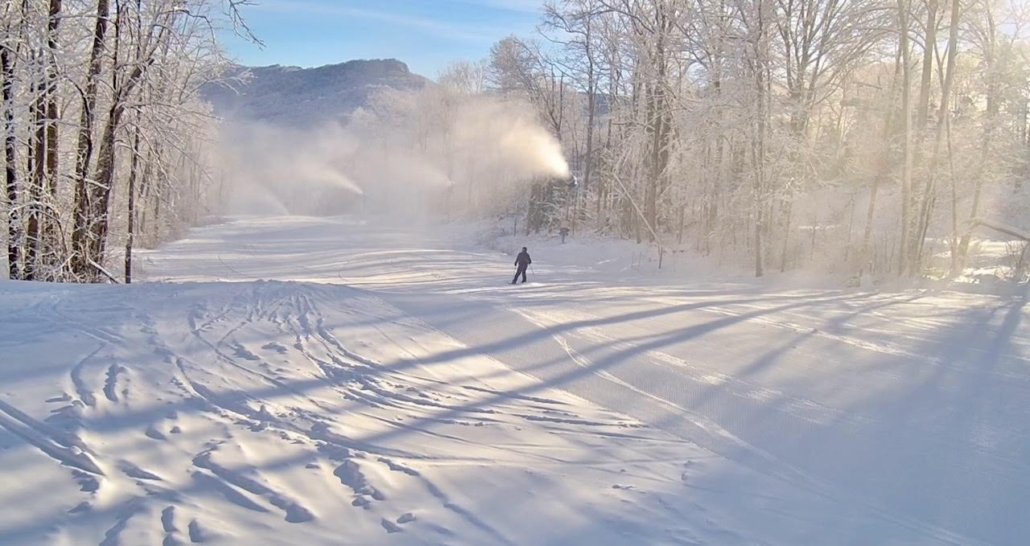
Sugar Mountain Resort is North Carolina’s biggest ski area, with a mile-and-a-half run to the lodge and1,200 feet of vertical from a 5,300-foot summit. This season debuts new LED slope lights on the Lower Flying Mile run to the base lodge and new snowmaking Sugar also has a tubing park, ice skating, and guided snowshoe tours.
Sugar Mountain (submitted by Randy Johnson)
Farther south, just west of Asheville, below snowy Big Bald Mountain and the Appalachian Trail, boutique Hatley Pointe Resort follows its buzzworthy debut last winter with widened and expanded existing slopes and new gladed runs and new snowmaking.
That permitted Hatley to gift its used snow guns to Cloudmont Ski Area, Alabama’s only ski slope, and southernmost in the East.
Cataloochee Ski Area’s diverse slope system clings to the border of Great Smoky Mountains National Park southwest of Asheville. This winter’s big news is the Omigosh Quad chairlift, a $4-miliion Doppelmayr Alpenstar lift, named after an adjacent black diamond. Cataloochee director of marketing and public relations Sarah Worrell, calls it “thelargest single capital improvement in Cataloochee’s history.”
Most Cataloochee lodging and dining is in the town of Maggie Valley, but classic Cataloochee Ranch, a landmark summer equestrian lodge from 1933, has memorable luxury accommodations close to the slopes.
Diminutive Sapphire Valley ski area near Cashiers, NC, gets a new magic carpet lift at its Frozen Falls tubing park. Other tubing options include North Carolina’s, and one of the East’s biggest tubing resorts, Hawksnest Snow Tubing, near Boone in the town of Seven Devils.
This winter, 6,300 foot Roan Mountain reopens after two winters of Forest Service infrastructure improvements and Helene repairs.
Virginia
Bryce Resort, just west of the Shenandoah Valley in Basye, Virginia, boasts a significant slope expansion this year. The resort has four new slopes, all joining existing runs like Bootlegger and White Lightning, names reminiscent of Prohibition or “Appalachian ‘craft’ alcohol.” New names include Speakeasy and 80 Proof, and the new Prost, recall the founding Locher family’s European roots with the German word for “cheers.”
Two new green slopes and one intermediate reflect Bryce's traditional beginner emphasis. The sole new black run, Randy’s Remedy, will appeal to better skiers who value the area’s long reputation for a quality ski racing program.
Atop the Blue Ridge near Charlottesville, Wintergreen has a massive multiyear effort rethink its entire snowmaking strategy and infrastructure, starting with the replacement of all snowmaking on the Dobie slopes and central mountain area, the busy easier terrain that links the resort’s two most flanking trail layouts.
Massanutten takes a breather this winter from the last several seasons of major slope expansion. The diverse new runs, including a third from the summit with 1,000 feet of vertical, simply reinvented the Massanutten ski experience. This winter, the region’s only employee-owned ski resort adds more snowmaking for its tubing runs and a Saturday night comedy club joins the season’s events lineup.
West Virginia
Canaan Valley, in northern West Virginia near Davis, is home to two major downhill ski areas, Canaan Valley Resorts’s State Park Ski Area and privately-owned Timberline Mountain Resort. Both crest beside the Monongahela National Forest’s lofty Dolly Sods Federal Wilderness, with 150 or so inches of annual snow.
Canaan Valley Resort’s state park ski area is winding up a $6 million investment by the West Virginia Division of Natural Resources. Related improvements expected to get more of the mountain open sooner and extend late season operation.
Timberline Mountain Resort has expanded snowmaking on Salamander, the two-mile longest run in the region. The added snow will extend this long cruiser’s season, good news for both beginners and backcountry fans. The slope heads left from the summit along the Dolly Sods Wilderness boundary occasionally offering tele-tourers access into the scenic alpine-like area.
Many of the backcountry Nordic folks slipping off into those woods will be heading to White Grass Ski Touring Center, simply the best Nordic resort in theMid-Atlantic and South. Situated between Canaan Valley Ski Area and Timberline, hip, happenin’ White Grass and its historic 80-year old ski lodge is like noother cross country resort out there. With connections to the high elevation lifts at adjacent slopes, a massive system of set track trails in between, and valley flat-tracking on the “snow farm,”
Snowshoe Mountain Resort, an Alterra Resort under the Ikon Pass program, is the biggest snow sports resort in the Middle Atlantic and southern states. Last year “the Shoe” celebrated its 50th anniversary and this ski season reaches back to its roots for the biggest single upgrade in recent years.
The half- century-old, landmark resort hub, Shavers Center, is being replaced and should open in January. Also new this winter—uphill skiing. West Virginia’s region-leading snowfall (150 to 180 or more annual inches) has always inspired the backcountry ski crowd and attracted Nordic skiers to a handful of reliable cross country centers. This winter taps that spirit by opening parts of Snowshoe’s considerable downhill terrain to alpine touring and split board uphill travel, including for headlamp-illuminated night skiing.
Winterplace Resort’s major changes this year are completion of a $2-million improvement program for new snowmaking more slope lights for night skiing, including in the Terrain Park.
[authors_page role=contributor]