


Keeping Warm on the Slopes
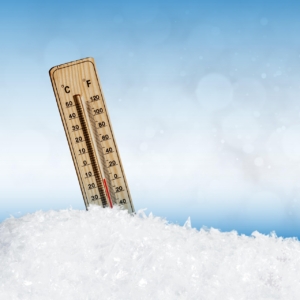
Pixabay photo
When the temperature drops and the wind starts to blow, it can be a real challenge to keep warm while skiing. It is no fun to be out there when you are freezing. To understand how to keep warm, it is helpful to know why you get cold. That is, how heat is transferred from your core to your extremities. It is also important to note that there is a considerable difference between men and women when it comes to body heat regulation.
Body temperature is controlled by a sort of thermostat in a section of the brain called the hypothalamus. Through a complex set of information receptors, the brain tries to analyze what is happening and send out orders to adjust body functions to compensate. It keeps your core temperature within a narrow, safe range even when the external climate changes.
When you feel hot, the blood vessels in your skin dilate to release heat through the skin. This causes the skin to sweat and appear flushed.
When you feel cold, the blood vessels in your skin contract to conserve heat. Your muscles often spasm (shiver) to produce heat and keep body temperature within a safe range. This thermo-regulation is a dynamic process that balances heat generation (through metabolism and muscle activity) and heat loss to the environment, to maintain core temperatures.
The average human has a normal body temperature of 98.6, although this can vary. The core temperature of women, on average, is slightly higher than that of men. In 1851 Carl Wunderlich studied 25,000 people and found that adult women were a bit warmer at their core, perhaps Nature’s way of protecting the reproductive organs. Scuba diving research has long noted that the core temperature of women divers is higher than that of men. Women actually are better able to resist the effects of hypothermia because their essential organs stay warmer longer.
This female heating system for the core means that less blood flows to their hands and feet and as a result they feel cold. This has been largely attributed to the very obvious difference in body structure, limb proportions, surface area, insulating muscle and fat mass, thickness and distribution between men and women, which results in women maintaining a lower skin blood flow and, consequently, lower skin temperatures. Or stated another way, women are typically smaller and have a higher ratio of surface area to volume, which causes a rapid loss of heat.
Women also have thinner skin (okay…I thought of several comments as well.) It is also true that as you get older, both men and women, your skin gets thinner. The skin on the feet of women is thinner and has less subcutaneous fat than men’s. The thinner the skin the less you are protected from the cold.
Studies show there can be as much as a five degree difference in the temperature of a woman’s hand at the same outdoor temperature as a man’s hand. According to an article published in the Journal of Applied Physiology, men have a metabolic rate about 23 percent higher than women’s. Your metabolism is the rate at which you burn food to fuel the body, and as a by-product of that process, you heat up the body. So, women’s bodies are colder than men’s because their metabolisms are slower.
Knowing all of this, how do we keep our body warm when it gets really cold. The human body generates heat, which warms the air around our bodies. The trick is keeping that warmed air next to the skin. This is where layers kick in. Each layer traps air. The more layers, the more trapped air. The body also sweats. That moisture needs to be wicked away from the skin. Again, layers help.
Keeping Hands and Feet Warm
Socks are really important. Never use cotton socks, which absorb and hold moisture. Use only socks specifically for skiing or riding, which often include padding at the shins for comfort more than warmth.
Bring an extra pair and trade them out at lunch time so any moisture that has built up can be eliminated. Spend the money for good ski socks – you will be glad you did.
Mittens tend to be warmer than gloves. Gloves separate the fingers. Mittens keep them together. I use a very warm soft glove as an inner layer and a lined leather outer mitten. Those little hand packs work well, or get battery operated gloves to keep your fingers toasty.
Wear a soft gaiter around your neck. This will trap the heat from your core from escaping upward and will keep your throat and the back of your neck warm.
Your ears also need protection as there is very little circulation there. Earmuffs are great, especially when your hat covers them as well. A helmet also traps in the heat from your head. Some folks have a hood on their jacket that comes up over the helmet. Others have a liner that goes under the helmet.
Your core area is the easiest to keep warm. Start with a base layer of breathable material. Over that you can add a second layer, making sure it is not cotton. Modern ski pants and jackets are wonderful creations. I like the bib-type pants that come up in the back and front so that when you bend the heat stays in the body.
When it gets cold outside, just layer up and keep moving.
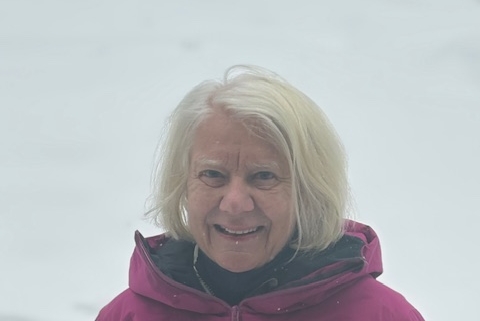
The Love Affair that Keeps on Giving
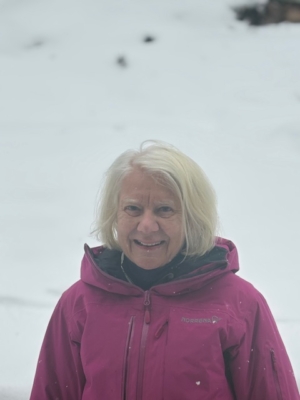
Cherri Sherman
Early in the first days that Sugarbush Resort was open, I was working on my ski legs on a green trail when a college-age young man zoomed by exclaiming, “I love to ski!” My heart smiled as I recalled my early ski memories.
Upon seeing a movie where the child star skis down a mountain each day to school, I knew skiing was an activity I needed to do. The realities of the sport’s cost and requirements did not align with my parents’ abilities. My father, a tail gunner who flew missions from London in World War II, was no longer emotionally equipped for sports despite having been raised enjoying them in Vermont. He never drove a car after the war nor did my mom. My mother did what she could to get me out on the snow by garnering a used pair of very long, wooden skis with no safety straps. Friends in high school with parents who took them to Turin in upstate New York, would kindly take me as well. My babysitting money bought my tickets. Despite having to chase my skis down the mountain as I learned and fell, I was hooked. I loved the thrill. Neither my unlined jacket or mittens deterred me. I would go into the ladies’s room and run my hands under hot water to ease the pain from the cold incurred from riding the rope tow over and over again. I made knickers from wide-whale corduroy and wore heavy wool knee socks that loved to collect snow balls! It was the best! The Central New York Snow Belt received feet of snow at a time and I loved every flake. The ski outings were infrequent but a strong beginning nurturing my love.
It would be skiing that would determine how my life would unfold. After college, with my first paycheck, I purchased my first pair of new skis— Head 360’s. I was beyond happy and proud. Shortly after, I made a solo ski trip to Sugarbush by bus and a rental car, I would ultimately meet a man in the Valley House Chair lift line who had responded to my yelling, “Single?” who would become my husband and the father of our five daughters. Through some fairy-tale-type experience, I inherited a lovely historic home in Warren that would serve our family on weekends and holidays when we traveled from our primary home in Connecticut. There was no question but that skiing would come to be much easier for our girls having the right gear, instruction from us and some ski school. Our Chevy Suburban would be the vehicle bringing friends and kids who wanted to ski but did not have parents that did. Love of the sport and all the fun and challenges surrounding it, kept us driving ten hours a weekend and prioritizing season passes and using them.
Now widowed, a grandmother to six, with Warren as my home, skiing defines my winters. Celebrating 80 in August, I now get front row parking. I take nothing for granted and constantly am grateful I am able to ski and to live in such a beautiful state. In a blinding snow storm, I recently got off the lift acknowledging the attendant who remarked, “You are going to love it!” She sure got that right!

Mineral King: The Disney Ski Resort That Never Happened
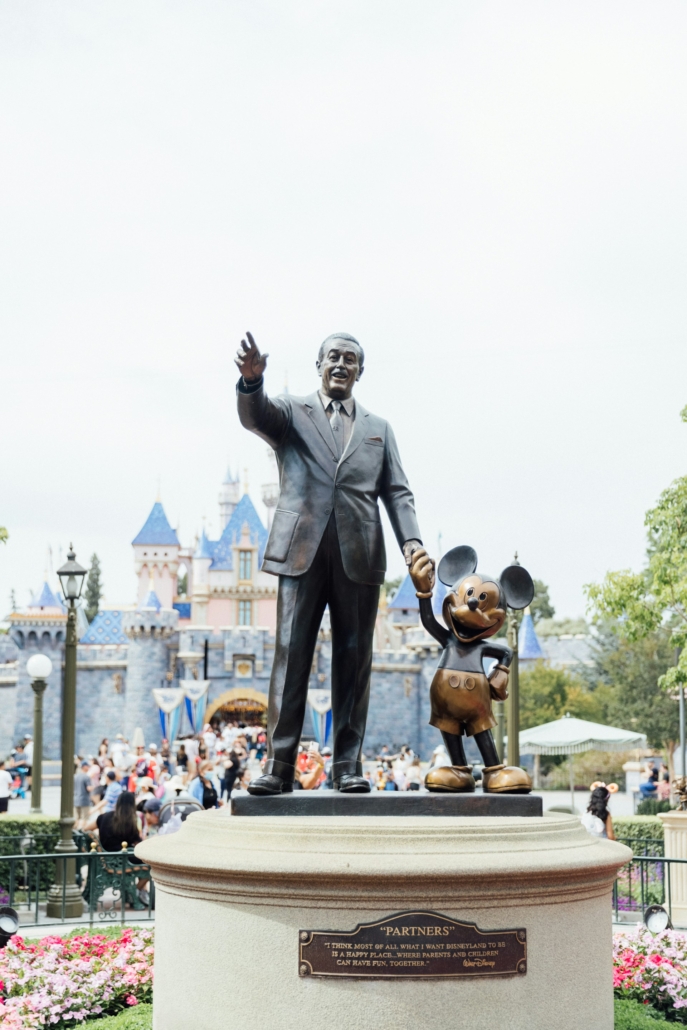
Photo by steven lozano on Unsplash
You could call this story “The Mouse That Didn’t Roar.” Or “The Biggest Ski Area That Wasn’t.” I’m talking about Mineral King, a ski resort in the Sierra Nevada Mountains slated to be built in the mid-1960s by Walt Disney Productions, but never happened. A passionate winter sports enthusiast, Walt Disney started skiing in the 1930s. He was an early investor in Sugar Bowl at Lake Tahoe, and also produced the opening and closing ceremonies for the 1960 Winter Olympics in Squaw Valley (now Palisades Tahoe).
In 1965, his company received a permit from the U.S. Forest Service to explore the skiing potential at Mineral King, named after an 1870s silver strike that soon fizzled. Set at 7,800 feet, the pristine, glacier-carved valley is surrounded by 12,000-foot peaks, alpine lakes, and wildflower-filled meadows.
Most important for snowsports lovers — those lofty summits receive 200 inches of snow annually. “I thought [Mineral King] was one of the most beautiful spots I had ever seen, and we want to keep it that way,” Disney said.
Walt died in 1966, but his vision lived on. Under the 1969 master plan, the ski area would initially stretch across five bowls and accommodate more than 8,000 skiers, with vertical drops of 3,700 feet, 22 lifts, and runs up to four miles long. Some people speculate that the animatronic ursines of Country Bear Jamboree at Disney World were originally planned for Mineral King. But I digress.
Walt never intended a Fantasyland-on-snowflakes. His concept called for lifts hidden behind ridges, underground parking, and alpine-style architecture like Vail or Whistler today.
The snag? Getting there.
Mineral King was reachable only via a treacherous 25-mile road open only in summer. Disney’s permit hinged on building an all-weather highway, part of which would cut through Sequoia National Park. A cog railway was later proposed to carry skiers to the resort.
With support from the U.S. Forest Service, California Governor Ronald Reagan, and even the Sierra Club, what could go wrong? Plenty.
In 1969, the Sierra Club reversed its stance and filed lawsuits to stop the project. “Protectionists vs. Recreationists—The Battle of Mineral King,” The New York Times headlined. The fight became one of the 20th century’s first big environmental confrontations. Although Disney won the legal wrangling, including at the U.S. Supreme Court, corporate interest waned as litigation and construction costs ballooned. The railway alone was projected at $25 million ($146 million in 2025 dollars) and the massive ski resort turned into Disney’s Never-Ever-Land.
In 1978, Congress added Mineral King to Sequoia National Park, forever ending winter sports development.
Today, Mineral King remains serenely unspoiled—a snowy Shangri-La. It holds a small glamping resort, two campgrounds, and about 65 privately owned cabins, some more than a century old. Rivers thread the valley; alpine lakes shimmer beneath granite peaks.
I visited in September 2025 with John Uhlir, a volunteer with the Mineral King Preservation Society. From 2008 to 2011, John conducted snow surveys here for the State of California. He’sone of perhaps 100 people who’ve actually skied these slopes.For snow surveys, John skinned up for hours near Farewell Gap. “Afterwards, I’d ski down the 2,500 feet of vertical in less than 12 minutes,” he said. “Snow conditions are a lot like Mammoth.”
The only road in or out remains the 698-turn beast (John has counted them) that once flummoxed Disney execs. But it’s doable. Allow 90 minutes for the 25 miles.
We met Laile Di Sivestrio, an interpretive ranger and historical archaeologist for Sequoia and Kings Canyon National Parks. She’s also a fifth-generation cabin owner, who led us on the three-mile Nature Trail. Enclosed by mountains, the valley feels less like a box canyon (which it is) and more like an alpine amphitheater, reminiscent of Saas Fee in Switzerland. Aspens were starting to blaze into color, and red currants dangled from bushes.
We paused at a Native American grinding rock, then clambered past a waterfall to the Black Wolf mine. Of roughly 200 mining claims filed here, 11 percent were by women—even though female ownership was illegal at the time.
Yosemite—just 75 miles away as the raven flies—draws 20,000 daily summer visitors. Here, I saw fewer than two dozen.
Driving home, I pondered the grand “what ifs?” What if Mineral King had been built? Was a skier’s paradise lost? Was nature’s wonderland saved? Then there’s that serpentine road. Does preserving wildness mean not everyone gets to see it?
I’m glad Mineral King stays wild—a Sleeping Beauty untouched by development’s kiss. And that road? It flips the skier cliché: instead of earning your turns, you drive hairpin turns to earn yourmountain views. Nonetheless, looking at the peaks, I could picture where blue cruisers and mogul runs might have been. Even John looked wistful. Pointing to White Chief, he said, “If you took down 14 trees, what a run that would be.”
Mineral King Road is generally open Memorial Day through October. Repairs are underway through 2027—check closures [nps.gov/seki/planyourvisit/conditions.htm] There’s no winter access except for cabin owners.
Visalia, 30 miles from the road’s start, makes a great base for exploring, with a charming early-20th-century downtown and great restaurants. Or, continue past Visalia to Mammoth.
[authors_page role=contributor]