

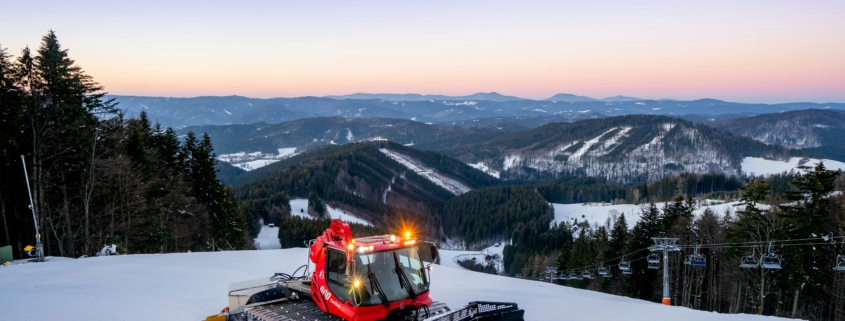
Tips and Tactics for Spring Skiing
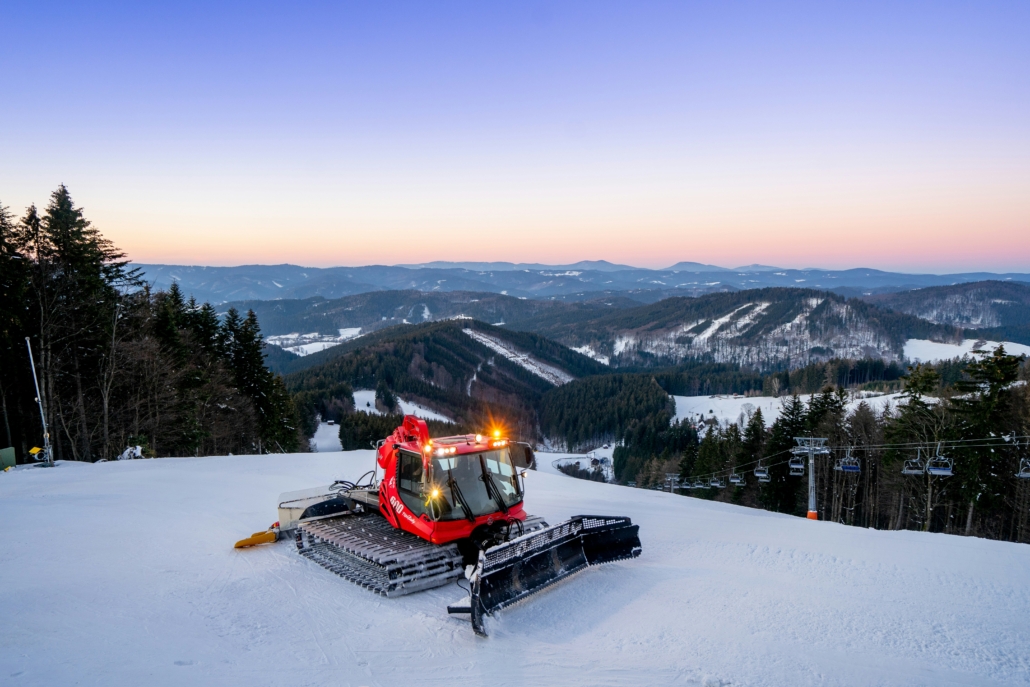
Photo by Michal Janek on Unsplash
The days are longer, the sun is brighter, the temperatures are warmer and the snow is softer. Ah, yes, spring skiing is special, when you can shed layers enjoy such end-of-season silliness as pond skimming contests and leisurely sun-soaked apres.
Spring skiing also needs some special attention, both to the condition of the snow and the condition of your equipment. Here is some sensible advice from a trio of ski and snowboard instructors at Whistler Blackcomb –
Understand spring conditions:
Nights are still cold on the mountain, so the snow can be firm in the mornings. Wait for the sun to soften the snow if you’re looking for that spring slush. Spring powder conditions can be slower and harder to ride through, depending on how deep it is. This can require making bigger, straighter turns.
Debate beauty sleep vs early bird:
Spring skiing means relaxed mornings and softer snow in the afternoons, but prime conditions for laps are in the morning.
Adjust your body language:
Make sure your weight is evenly distributed along the downhill ski (or along the inside edge of the snowboard) at the end of the turn. If there is too much weight, too far forward, the back of the downhill ski (or snowboard), can slide out. Skiers should make sure you don’t have your weight forward at the end of the turn. Instead, what is needed is pressure on all parts of the foot from the toe to the arch, to the heel. This allows the edge to dig in. Tighten your downhill ankle by rolling inwards to put the ski on more of an edge, and tighten your muscles so you have more control.
In powder and deeper slush, push your feet a bit forward through the end of the turn. In deeper snow, it is common for a skier’s feet to slow down due to the increased friction of the snow. The wetter the snow is, the more likely it is for this to happen. This can result in a skier being thrown forward. To counter this, skiers can push their feet forward through the end of the turn.
It is important to also push their hands forward as well, otherwise, you will be leaning too far back. This puts extra pressure on the quads. When skiing, we always want our shoulders over our knees. Snowboarders can also accomplish this feeling by pushing the front of the board forward if they feel that their board is being slowed down by the deeper, wetter snow.
Get a wax:
You’ll definitely want your skis or board to be waxed to avoid getting stuck in slush. A good sign that your equipment is running out of wax (besides not gliding properly anymore) is a white cloudy effect on the edges of the base near the metal – this is where the snow is causing friction burn against the p-tex base.
Tree runs and spring conditions don’t mix:
As the snow melts, obstacles can emerge in forested areas that are hazardous to skiers and riders and damaging to your gear. Tree wells are also a hazard, so stay away from the trunks of trees, especially if they have low-hanging branches. And always ski with a buddy.
Dress properly:
Layer with breathable, quick-drying fabrics, wear sun protection, and pack a small backpack with essentials like water, sunscreen, and extra layers for changing conditions. The jury is still out on whether goggle tans are considered cool, but there’s no doubt that if you want to avoid a nasty burn, sunscreen is a must. With high altitudes and UV rays reflecting off the snow, it’s easy to get sun damage. And don’t forget the lip balm with SPF.
Have fun and be safe. See you on the spring slopes!
Why is Watching the US Ski Team on TV so Damn Difficult?
I’ve been an avid alpine racing fan since I was a kid. I grew up in the industry, was a competitor in college and coached on the collegiate level. I’ve been fortunate to attend many FIS World Cup races at iconic venues around the world. I still follow the US team at every opportunity, and therein lies the rub.
Despite the incredible success of US Team members in recent years, being a fan today is as difficult as the courses those racers navigate. Trying to watch is as frustrating as skiing out on the second run. When coverage is available, I watch on NBC Sports and Peacock. NBC Sports only carries marquee events such as the Olympics and World Championships but at least, since they’re on cable, I can use my DVR (in my opinion NBC Sports did a better than average job covering the World Championships in February). Peacock? Where to begin? Simply awful coverage, if you can find it. Live coverage generally originates in Europe when it’s so early in the morning it’s hours before most people are up. Watching after the event presents a lineup of chopped up highlights and old events. When Mikaela Shiffrin returned to competition after her injury at Killington, VT she was gunning for her 100 th win. She got it, but few in the US saw it.
So, I asked myself the leading question above. Why is watching the US Ski Team on TV so damn difficult? The answers are myriad. I know there are licensing issues with the FIS but as I researched the issue, I couldn’t believe what a tangled mess the subject is. Here are the obstacles I learned about:
1. Broadcasting Rights Creating Poor Coverage
Fragmented and inconsistent broadcasting rights are a major hurdle. Unlike other sports, each country controls its own broadcast rights for FIS Alpine Ski Racing, meaning a U.S. viewer might need different platforms to watch races depending on where they are held. NBC, who holds the US rights, has shuffled ski racing coverage around their various platforms. Such inconsistency is the reason fans must subscribe to multiple services.
2. Time Zone Challenges
As previously mentioned, many races occur in the early morning hours in the U.S., often between 3 AM and 9 AM Eastern. This creates a major time zone challenge for American audiences. Some hardcore fans may wake up early to watch races live but there’s little chance to build an audience as casual viewers are unlikely to tune in at such inconvenient hours. Delayed highlights further frustrate fans who want to see the action as it happens. Worse still, delayed coverage can be poorly edited or filled with excessive commercials, detracting from the viewing experience.
3. Limited Mainstream Appeal in the U.S.
Alpine skiing remains to be a niche sport in the U.S. While recent successes by American ski racers have generated interest, ski racing still lacks the widespread appeal needed to justify consistent prime-time coverage. Without a large enough audience, broadcasters have little incentive to make ski racing more accessible. Football, basketball, or even other winter sports like snowboarding and freestyle skiing have a larger fan base. This means networks don’t see Alpine Skiing as a profitable sport to broadcast live.
4. Marketing and Promotion is Lacking
Compared to major American sports leagues, ski racing receives minimal marketing in the U.S. Many potential fans are simply unaware of when or where races are airing because they are not widely promoted. Social media and streaming services have made it easier for fans to track results and highlights, but this does not replace live TV broadcasts. Without effective marketing, ski racing struggles to grow its audience in the U.S., which further discourages networks from investing in better coverage.
5. European Network Dominance
Coverage is primarily produced by European broadcasters who cater to European audiences, often providing extensive coverage in multiple languages. In contrast, U.S. networks rely on sublicensing agreements, which means they do not have full control over the broadcasts. There isn’t a single, easily accessible platform in theU.S. where fans can consistently watch all FIS Alpine Ski Racing events.
6. Weather Uncertainty
Alpine skiing is not easy to televise. It must cover the course which often means top-to-bottom camera placements on the side of a mountain (in recent years drones have made that a little easier). It’s heavily dependent on weather conditions, which often leads to schedule changes, cancellations, or delays. Unlike sports played in controlled environments, ski races can be postponed or even canceled due to snowstorms, high winds, or unsafe course conditions. Such unpredictability makes it difficult for networks to plan TV coverage. This issue further discourages U.S. networks from committing resources to live alpine ski racing broadcasts.
7. A Rising Stream
While streaming theoretically allows for more flexibility, it’s become more complicated by leading to a fragmented viewing experience. In the past, fans could rely on cable networks like NBCSN, but now, many races are exclusive to Peacock, Ski and Snowboard Live, or other niche platforms. Watching all FIS Alpine Ski World Cup events in the US leads to what has been called “subscription overload”. This makes it expensive and frustrating to follow the full season. Additionally, some races may only be available through international services requiring VPN access, further complicating the process.
8. The Need for an American-Based Production Model
American sports networks invest heavily in high-quality broadcasts with expert analysts, multiple camera angles, and dedicated coverage teams. In contrast, alpine ski racing coverage in the U.S. often relies on European feeds with minimal local production. If an American network were to invest in a dedicated ski racing production team, it could create more engaging broadcasts, attract new fans, and make the sport more accessible. However, given the current lack of financial incentive, such an investment remains unlikely.
Conclusion: No Improvement Soon
For US fans, following our Ski Team will continue to be an uphill battle. It will require determination, multiple subscriptions, and a willingness to navigate inconvenient time zones and unreliable coverage. While streaming services offer potential solutions, they have also fragmented access, making it expensive and confusing to watch a full season of racing.
Until there is a stronger demand for alpine ski racing in the U.S., networks will likely continue to provide inconsistent coverage. The best hope for improvement lies in better streaming options, increased promotion, and American skiers continuing to dominate the sport, which could attract more viewers. For now, dedicated fans like me will continue to rely on niche streaming services, social media updates, and occasional network broadcasts to stay connected to the sport we love.
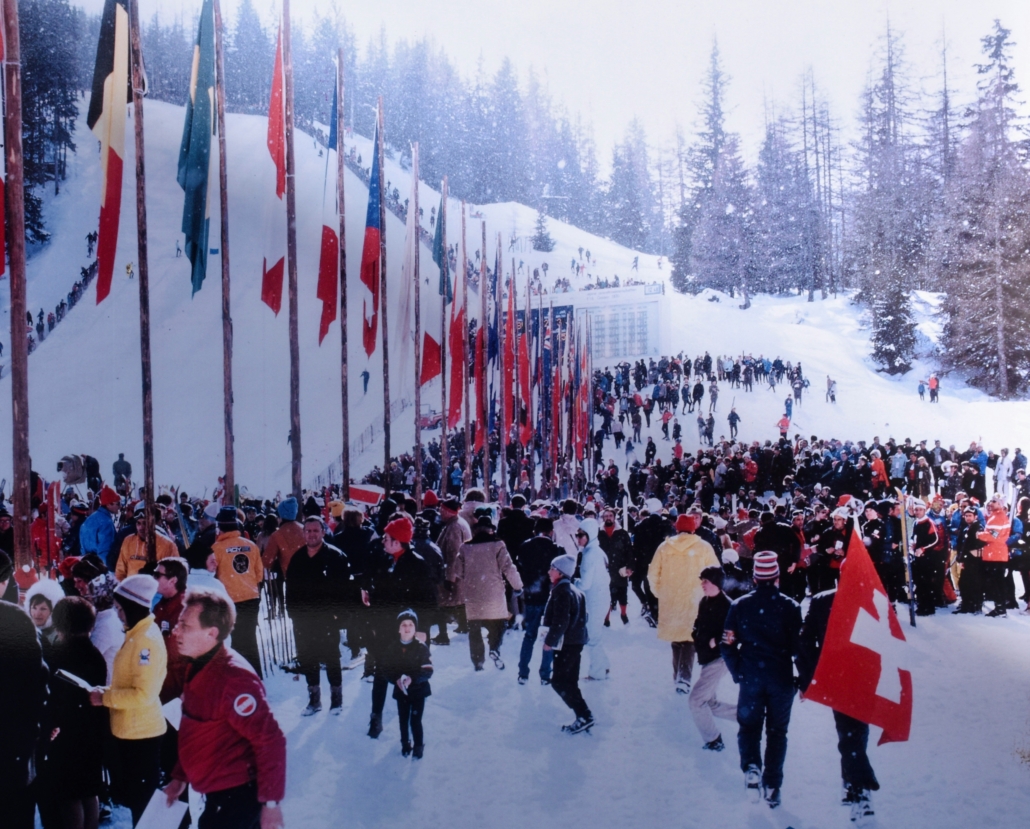
The finish of the female downhill competition at the Ski World Championship held in Val Gardena Garden Südtirol Italy. It’s February 11, 1970. This and other images were on public display to commemorate the 50th anniversary of this event. Photo by Arno Senoner on Unsplash
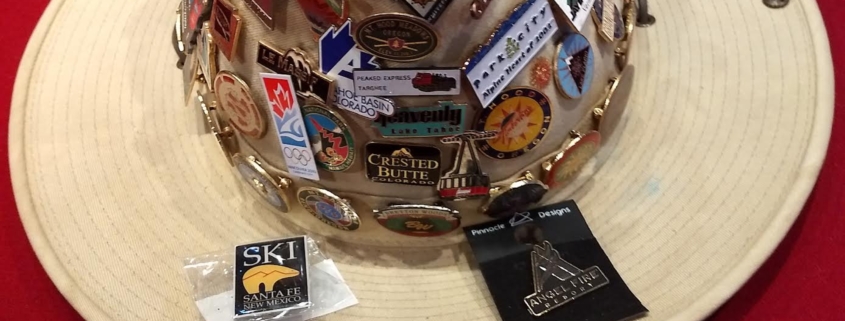
My Spring Skiing Hat
I started my collection of pins and patches from ski areas about 30 years ago, when I began writing about skiing for the Albany Times Union newspaper in New York. It gave me the opportunity to visit many ski areas, and whenever I went to a new ski area, I would purchase a pin and a patch.
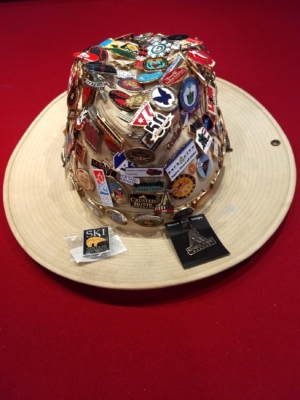
Mike Roth’s pin-filled hat
That created a problem – where to put them.
I started by putting them on my ski coat but that became a pain since I wore more than one ski jacket and moving them would have been a nuisance. Before helmets were even thought of for skiing, I would ski in the spring wearing my hat, but I never thought of putting the pins on it. Until my pin collection started to become voluminous.
So, the hat became the object of consistency, for spring skiing. Everywhere I went, it always attracted comments and questions from fellow skiers.
In airports, prior to TSA and screening, there were no problems at all. Now, my pin-filled hat has to pass through the x-ray machine to see if there are any sharp objects hidden within, besides the actual tiny pins that pins the pins to the hat.
There have been lots of comments – both from other passengers and from TSA personnel – as I would go through the airport and go through security, but no one at security ever stopped me, just lots of conversations. A few times, people in the plane would approach me and actually give me pins that had meaning for them, like Olympic pins. Once, in St. Moritz, I was given a pin from 1920’s of the St. Moritz Ski School.
These pins used to poke me in the head until I found a locking device at a motorcycle rally. Now, all these sharp pins have been ground down to being flat and there are no more scratch marks on my balding head.
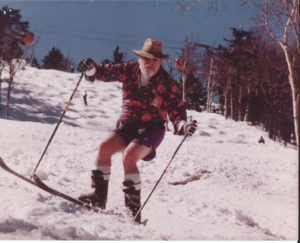
Historic Photo of Mike Roth
Currently, there are about 120 pins plus on my hat. The biggest issue today is that my hat weighs more than ten pounds and is no longer comfy to wear skiing or otherwise, so it is semi-retired at this point. I’m thinking it should be donated to a ski museum somewhere, including because some of those pins are from areas that have since closed.
I am still missing a few pins from way back when I first started to ski, such as Brodie Mountain, Homestead and Rock Candy Mountain. Most recently added Snowbasin, Diamond Peak and Mount Rose to the collection, but there is no room on the hat. So, I think I am going to have to get a bigger 10-gallon hat to make more room.
But it’s a daunting prospect to remove 120 pins and then reload them, and a new hat still would weigh more than ten pounds.
BTW – the photo is from Killington about 40 years ago. I still have that wind breaker shell, which I purchased on Rush Street in Chicago in the late 60’s. It still fits – because I had to take out the seams and add more girth.
[authors_page role=contributor]